Bridging the Generational Gap: Lessons from OK Boomer Moments
In 2019, a simple phrase captured the frustration of younger generations toward their elders: “OK, Boomer.” When Chloe Swarbrick, a 25-year-old New Zealand parliamentarian, used it to silence an older heckler during a speech on climate change, the moment went viral. It wasn’t just a witty comeback; it became a symbol of the growing divide between generations. This phrase highlights the tension many millennials and Gen Zers feel toward baby boomers, especially around issues like climate change, politics, and workplace culture.
Understanding this divide is essential for leaders today. The book 4-Gen Leadership by Mark White and Sami Scarpitti explores how different generations think, work, and communicate. It offers practical advice for leaders who want to bridge these gaps and build stronger, more inclusive teams. This post will explore key lessons from that book and the “OK, Boomer” moment to help leaders connect across generations.
Why Generational Differences Matter
Generations are shaped by the events, technology, and culture they grow up with. Baby boomers, born roughly between 1946 and 1964, experienced post-war prosperity and the rise of traditional corporate culture. Millennials and Gen Z, on the other hand, grew up with the internet, social media, and global challenges like climate change and economic uncertainty.
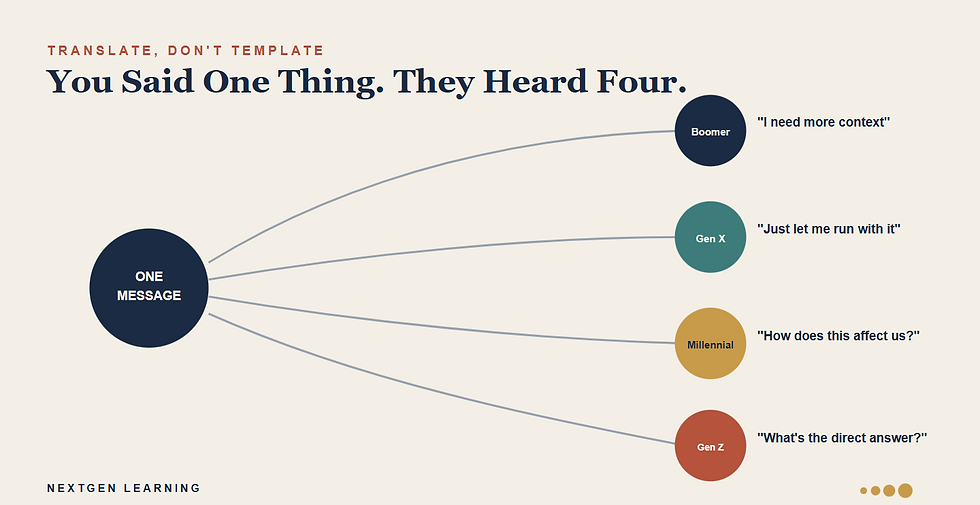
This difference creates distinct values and expectations:
Baby Boomers often value loyalty, hierarchy, and face-to-face communication.
Generation X tends to prioritize independence, adaptability, and a work-life balance, often valuing technology as a tool for efficiency.
Millennials seek purpose, flexibility, and digital communication.
Gen Z prioritizes diversity, mental health, and rapid access to information.
When these values clash, misunderstandings arise. The “OK, Boomer” moment is a clear example of younger generations pushing back against what they see as outdated attitudes or inaction.

Chloe Swarbrick’s confident speech in New Zealand Parliament became a symbol of generational frustration.
How Leaders Can Bridge the Gap
Leaders face the challenge of managing teams with diverse generational backgrounds. The book 4-Gen Leadership offers several strategies:
1. Understand Each Generation’s Motivations
Leaders should take time to learn what drives each generation. For example, millennials may prioritize work-life balance and meaningful work, while boomers might focus on job security and recognition for experience. Recognizing these differences helps tailor communication and incentives.
2. Create Inclusive Hiring and Retention Practices
Hiring across generations means adapting recruitment methods. Younger candidates may prefer digital interviews and social media outreach, while older candidates might value traditional references and in-person meetings. Retention also requires flexibility, such as offering remote work options or mentorship programs.
3. Support Gen Z’s Transition into the Workplace
Gen Z is entering the workforce with unique needs. They often expect rapid feedback, value diversity, and want clear career paths. Leaders can support them by providing structured onboarding, regular check-ins, and opportunities for skill development.
4. Address Quiet Quitting Openly
“Quiet quitting” refers to employees doing only what their job requires without extra effort. This behavior can stem from burnout or feeling undervalued. Leaders should foster open communication, recognize contributions, and ensure workloads are manageable.
Practical Examples of Bridging Generations
Mentorship Programs: Pairing experienced boomers with younger employees encourages knowledge sharing and builds mutual respect.
Flexible Work Policies: Offering options like remote work or flexible hours appeals to millennials and Gen Z without alienating older workers.
Cross-Generational Teams: Mixing ages in project teams encourages diverse perspectives and reduces stereotypes.
Training on Communication Styles: Workshops can help teams understand how different generations prefer to give and receive feedback.

Cross-generational collaboration helps build understanding and respect among team members.
Looking Ahead: The Future of Generational Leadership
The workplace will continue to evolve as Gen Z grows into leadership roles and new generations emerge. Leaders who embrace generational differences will create stronger, more adaptable organizations. This means:
Encouraging ongoing learning about generational trends.
Building cultures that value diversity of thought and experience.
Being open to change and new ways of working.
The “OK, Boomer” moment reminds us that generational tensions are real but can be addressed through empathy and communication. Leaders who listen and adapt will help their teams thrive.

Comments